Saturday, 30 May 2015

Shakespeare - "To be, or not to be"

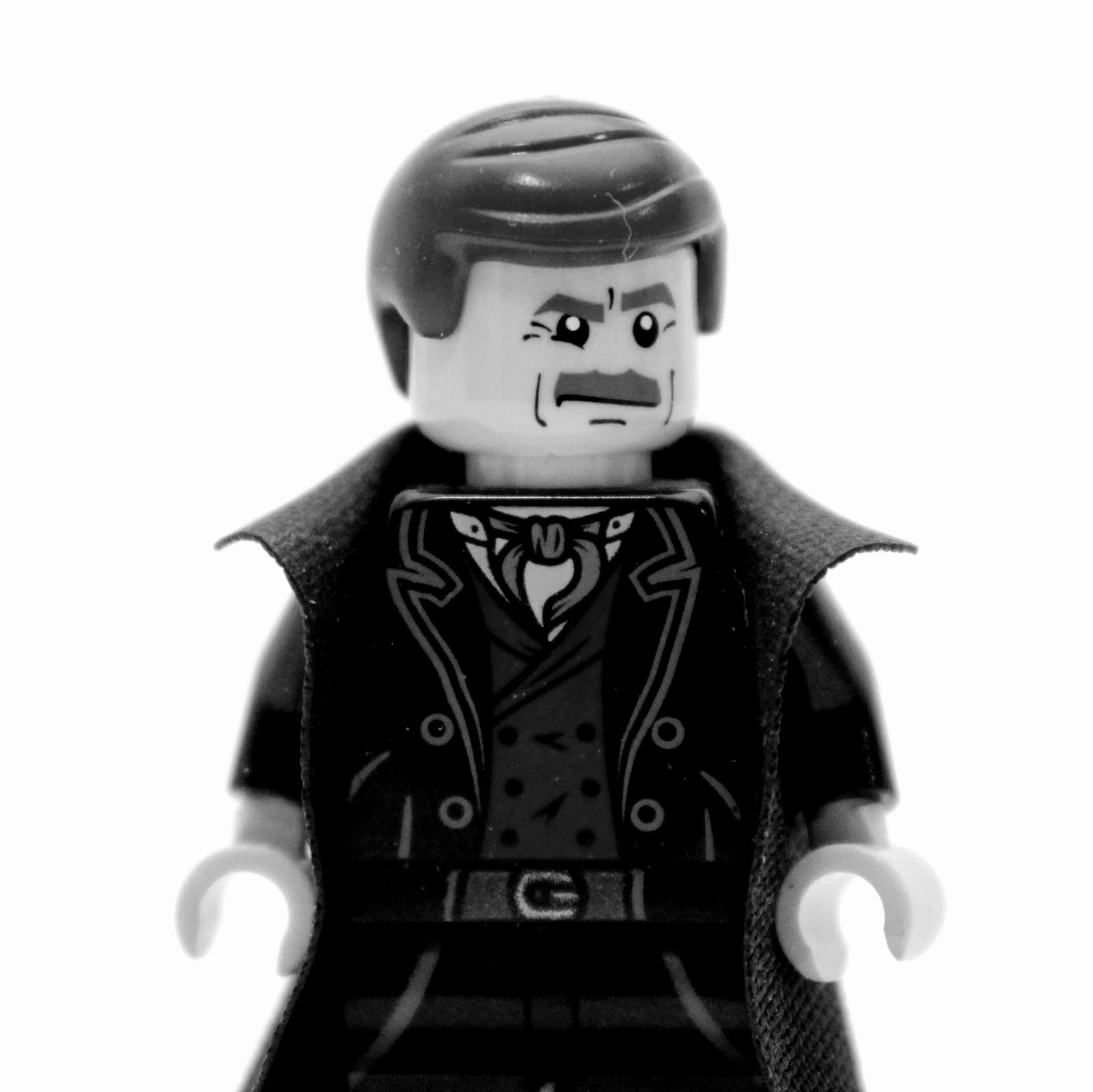
Lego Shakespeare 
1564-1616
William Shakespeare was born in 1564 at Stratford-upon-Avon in Warwickshire. His father was John Shakespeare, a glove maker and wool merchant and his mother was Mary Arden. He was most likely educated at the local King Edward VI Grammar School in Stratford. He married at the age of 18 to Anne Hathaway in 1582.

The years between 1585 and 1592 are known as the 'Lost Years' as it is not known what Shakespeare achieved in the period. We find him in London and became an actor. He also became one of the managing partners of the Lord Chamberlain's Company. The company acquired interests in only two theatres in Southwark area of London near the south bank of the Thames, The Globe and The Blackfriars.

In 1593 and 1594 Shakespeare wrote his first poems, 'Venus and Adonis' and 'Rape of Lucrece'. Both published by Henry Wriothesley, Earl of Southampton and his patron. According to the records he wrote his first play in 1594. Making about two plays a year until 1611. His earliest plays were mainly historical and comedies, such as 'Henry VI' and 'A Midsummer Night's Dream'. Then later on he moved onto tragedies, such as 'Romeo and Juliet'.

In 1596 John, Shakespeare's father was granted to have a coat of arms. In 1597, Shakespeare bought a larger house in New Place, Stratford. By the last years of the Elizabeth I's reign he was called upon to perform several of his plays before the Queen and court.

William Rowley 
you got the lines all wrong.
 It's "Alas poor Yorick,
 I knew him".
In 1602, Shakespeare's success enabled him to move upmarket in Silver Street, London. While he was living here he wrote some of his greatest tragedies, such as 'Hamlet' and 'Macbeth'.

After his long career, he spent the last five years of his life in the family home in New Place, Stratford. He died on 23rd April 1616 at the age of 52 and buried in Holy Trinity Church in Stratford. He bequeathed his property to the male heirs of his eldest daughter, Susanna and his 'second best bed' to his wife.

The first collected edition of his works was published in 1623 and was known as the 'First Folio'. 

Monday, 11 May 2015

Albert Einstein - E=mc2

Einstein
1879-1955
Albert Einstein was born in Ulm in South Germany on 14th March 1879. His family moved to Italy after his father's business went under. Einstein studied at the Institute of Technology in Zurich. He published four scientific papers, one looking at his Theory of Relativity and his equation of  E=mcwhich related mass and energy. 

In 1909, Einstein became professor of Theoretical Physics at Zurich, in 1911 professor of Theoretical Physics at the German University of Prague and then returned to the Institute of Technology in Zurich in 1912. In 1914, Einstein was appointed director of the Kaiser Wilhelm Institute for Physics in Berlin. Became a German citizen a year later. 

In 1916, he published his Theory of General Relativity. He then received a Nobel Prize in Physics in 1921, for his discovery of the law of the photoelectric effect and his work in the field of theoretical physics. During the 1920s, Einstein lectured in Europe, North and South America and Palestine. 

E=mc2
However, being Jewish Einstein increasingly became the focus of hostile Nazi propaganda. In 1933, the Nazis took power in Germany, Einstein then emigrated to America. He accepted a position at the Institute of Advanced Study in Princeton and took US citizenship.

In 1945, Einstein retired from the institute but still worked for the rest of his life on his theories. He continued to be in a peace movement. Although on 18th April 1955 in Princeton, New Jersey, Einstein died.

Wednesday, 22 April 2015

Henry Stanley - "Dr. Livingstone, I presume?"

Lego Henry Stanley
John Rowlands was born, illegitimately, on 28th January 1841 in Denbigh, Wales. He was brought up in a working house. Although in 1859, Rowlands moved to New Orleans, where he befriended a merchant, Henry Stanley, whose name he adopted. 

When the American Civil War broke out in 1861, Stanley worked both sides and then worked as a sailor and journalist. In 1867, he became a special correspondent for the New York Herald. 

In 1869, he was commissioned to search for the missing Scottish Explorer David Livingstone, who had been missing since 1866, when he set off in search for the source of the Nile. Stanley went to Livingstone's last known location Zanzibar. In November 1871, he found the sick explorer.

Dr. Livingstone
1813-1873
After Livingstone died in 1873, Stanley continued his exploration of the region funded by the Herald and a British newspaper. He managed to explore most of central Africa, and travel down the Lualaba and Congo Rivers. Later reaching the Atlantic in August 1877.

After he failed to gain support from Britain, for his plans to develop Congo region, he found success in the King of Belgium, Leopold II, who was eager to tap Africa's wealth. In 1879, Stanley returned to Africa, where he worked to open the lower Congo to commerce by the construction of roads. In doing this he used brutal means, such as forced labour. On the other hand, Stanley's efforts created the foundation for the Congo Free State, which was privately owned by Leopold II.


In 1890, Stanley finally returned to England, where he married and began a worldwide lecture tour. Then becoming a member of Parliament for Lambeth in London, serving from 1895-1900. He was eventually knighted in 1899. However, on 10th May 1904 in London he died.

Monday, 6 April 2015

Andy Warhol - "the idea of waiting for something makes it moreexciting."

Lego Warhol and
his Campbell's Soup tin.
Andrew Warhola was born in 1928 in Pittsburgh, Pennsylvania, US. Both of his parents emigrated to the US from Slovak Republic. Warhola or Warhol was an American artist, who was a leading figure in the movement of Pop Art. His work looked at relationships between expression, celebrity culture, advertisement and death in the 1960s.   

Between 1945 and 1949, Warhola studied at Carnegie Institute of Technology. In 1949 he moved to New York where he changed his name to Warhol. Once there he started work as a commercial artist for magazines, designer for advertising and window displays. 

In the early 1960s, Warhol began experimenting with reproductions based on advertisement, newspaper headlines and other mass-produced image, coming up with the Campbell's Soup tin and Coca Cola bottles.

In 1962, he began his portrait series of Marilyn Monroe. Then later going on to Jackie Kennedy and Elvis portraits. That same year Warhol took part in a New Realists exhibitions in a number of New York art galleries, the first reorganization of Pop Art.

Lego Warhol
with his famou dollar print.
In 1963, Warhol began making experimental films, depicting things from everyday life such as the 'Eat' and the 'Sleep' or something more outrageous as the 'Kiss' or even the 'Blow Job'. Most of these films can last as long as 45 minets to an hour or more. In 1968, Warhol was shot and seriously injured by Valerie Solanas, a radical feminist writer.

Warhol was an internationally famous artist who had his work exhibited around the world through the 1970s and 1980s. Although on 22nd February 1987, Warhol died in a New York hospital after having a gallbladder operation. 

Friday, 20 March 2015

Boudicca - "Win the battle or perish, that is what I, a woman, will do!"

"Win the battle or perish,
that is what I,
a woman, will do"
- Boudicca by Tacitus
Boudicca was born in about 25-30 CE in Colchester, South East England. She married King Prasutagus of the Iceni tribe, East Anglia, in 43-45 CE and had two daughters. When the Romans conquered Southern England in 43 CE, they allowed Prasutagus to continue his rule. 

However, after Prasutagus died in 60 CE, the Romans decided to rule the Iceni directly and confiscated the property of the leading tribesmen. They are also believed to have stripped and flogged Boudicca and raped her two daughters. These actions brought resentment to the Roman rule.

In 60 or 61 CE, while the Roman governor Gaius Suetonius Paulinus was leading a campaign in North Wales, the Iceni conspired with their neighbours the Trinovantes, among others, to revolt against the Romans. Boudicca was chosen as their leader.


Boudicca was armed with 100,000 men attacked Camulodunum (Colchester) where the Romans had their main centre of rule. Camulodunum was burnt to the ground and leaving no survivors.

The next rebel's assault was on the largest, on Londinium (London), where 25,000 inhabitants were killed and parts of the city were burnt down.

Reports reached Suetonius, who gathered his forces to stop Boudicca in her tracks. Boudicca and her army marched on Verulamium (St. Albans), which was mostly populated with Britons who had accepted Roman rule. The inhabitants were killed as the city was destroyed around them.


"I am fighting for my freedom"
- Boudicca by Dio Cassius
Boudicca's army contained about 230,000 men and the Roman forces of Suetonius was only 10,000 men. The location of the final battle in 61 CE, is unknown, although it is believed that the site is in the West Midlands along the Roman road (Watling Street).

Boudicca's forces may had the numbers but they lacked the organizational, skill and equipment, which all contributed to her defeat. The Roman's lost 400 men and Boudicca lost 80,000.

It is uncertain on how Boudicca died. Tacitus claims she fled back to her tribe where she and her daughters drunk hemlock rather be captured by the Roman forces. However, Dio Cassius claims that the great queen died of illness.