Showing posts with label Museum. Show all posts

Sunday, 25 September 2016

Google's Art & Culture - Online Galleries

Now Google's Art & Culture is an really interesting and probably is the biggest of the on-line museum and art galleries catalogs out there. Maybe, because Google is a billion pound company or as they have started this project a long time ago and they have built it up to what it is today from there. Now I am not going to take a look at all about this amazing site has to offer, as this would be like reviewing the internet itself, a impossible task.

When the Art Project first started in 2011, the site had a huge collection of scanned works of art. For the first time you could take a close look at works of art and learn about the pieces; and the artiest who made them. You could see the artist brush strokes and the detail of the art work which you might have never been able to do at a art gallery. The project has evolved and now you can do and see so much more. 

At the moment I believe the site is a beta test and might be changed or updated to something even better than what's up at the moment but I see this as really unlikely.

You can take a look at articles, artefacts, art work, museum collection, Google Earth drop-in historic and museum/art galleries; historical accounts on events, people and so much more. 

Now with the artefacts, art work and museum collections you take a close look at individual objects with high detail. The site allows you to look close to objects for the first time. This makes you feel like you are looking at the object face-to-face or with a magnifying glass. Allowing you to see everything from the artist's brush strokes to every tiny detail.

Now there is a fabulous section of the site were you can digitally drop into a historic locations or museum/art galleries. In the same style as the drop-in setting of Google Earth, this allows to take a virtual tour of the location. This gives you idea of what the place it like and also allows to take a closer look of the highlights of the exhibits, giving you a taster of what you can see.

Now I could go on and on about this site as there is so much of it to take about.

The whole site is amazing. However, the only thing that I can say which is bad is the size of the collection they provide you. Now to many that's not a problem and it isn't but it is a problem if you can't search through all which they have. For example you have 1,692 of them. You get a search engine to search things, this is great if you know what you are looking for. However, can't possible know what they have to offer if you don't know and you are simply browsing. In my opinion it would be far easier with a filter system allowing you to select specific theme, century, topic etc. In the way they provide you, you would need to sieve through all what they have to find something you wish to take a look at. The other problem is the search engine itself as if you spell anything wrong, the search engine will not recognize it or give you alternatives search. So at the end you will turn up with your search with practically nothing.


Although it has some problems I must give Google a huge amount of credit. This site is what museums should inspire to with their own on-line catalog or gallery. 

Wednesday, 17 August 2016

The Weirdest Museums!

A few weeks ago I went into one of the most weirdest museums I have ever laid my eyes on. Now this inspired me to go and find out more about other really weird museums that might be out there. Surprisingly there are a lot. However, there was nothing on the one I went to, the National Poo Museum. Yes you read correctly, a museum about Poo. Now I will go into what they actually have on display and other weird museums below.

The National Poo Museum
Sandown, Isle of Wight.

Now they don't have open excrement simply placed on a shelf for you to examine, they aren't that weird. Each donation which the museum has is clinically displayed within a transparent plastic globe to preserve the specimen in its natural state. Now you can see a wide range of excrement, from human baby to lion. But be sure not to miss the cat poo in a kid's shoe.

Icelandic Phallological Museum
Reykjavik, Iceland.

This museum is the home to 215 penises and other peniles of most of the land and sea mammals found in Iceland. Now if you think I am joking about this, you couldn't be more wrong. But do take a look at their range of items, from the blue wale to mice. The subject matter of the museum is unusual and strange, the museum itself is totally serious. In entering you will be able to learn all about the world of Phallology, the study of penises, and their place in history, art and society. 

Currywurst Museum
Berlin, Germany.

The Germans love their sausages so why not have a museum dedicated to the Currywurst. At the ketchup-red museum display is a multi-scenery exhibit allowing the visitor to experience the sounds of sausages sizzling and smell exotic spices as they go around the rest of the museum. The museum has even recreated a food cart so visitors can go in and imagine making their favorite snacks. 

The Museum of Bad Art
Brookline and Somerville, Massachusetts, USA.

The only museum dedicated to celebrating bad artwork in all its forms. Why go to see quality art when you can see terrible pieces of art which some people may relate to or make them feel talented. As you walk through the galleries you will see artworks with clashing colours, out of proportion figures and lack of talent. So if you are feeling down about your art course, or even think you aren't good enough to make it as artist, then just spend a day here and you'll never worry about it ever again.

Parasite Museum
Tokyo, Japan

This museum is home to over 300 varieties of parasites including a 30 foot tapeworm. On top of this the museum has set up a scientific research center to study the small and the huge of the parasitic world. You might very eat or go to exotic place ever again but at least you will learn something about these disgusting critters. 

Sulabh International Museum of Toilets
New Delhi, India


This museum looks at the entire evolution of the toilet throughout history. The museum as been able to trace the toilet back through history till 4,500 years ago. You'll be able to see all, from chamber pot to Victorian toilet seats. In this museum even the rest rooms are in someway a exhibit.

Museum of Funeral Carriages
Barcelona, Spain


This museum is a basement at the city's Municipal Funeral Services. Here visitors are taken to the dusty basement by a security guard. Down there you can make your way around the exhibit's ornate carriages, some of which date back to the 18th century.

Hair Museum
Avanos, Turkey


This museum was created by Chez Galip, in rural Turkey. The museum is home to his huge collection of more than 16,000 women's hair samples. To make things even creepier the museum is located in a small, dark cave. Don't worry they let you keep your hair on.

Paris Sewers Museum
Paris, France
 
When I say sewers museum, I mean a museum in the sewer. Paris has a network of tunnels were visitors are introduced to the world of sewage disposal from the 13th century drainage systems to the first closed sewers in the late 19th century. Guides talk about the history of keeping Paris clean and for the stronger stomached  visitor you can have a walking tour of the tunnels.

Museum of Broken Relationships
Zagreb, Croatia
 
This museum is revolve around the concept of failed relationships and their ruins. Visitors are welcome to add to the collection with their own experiences and gifts from broken relationships. The artifacts include rings, clothing, Valentine's Day gifts and the occasional fuzzy pink handcuffs. However, I wouldn't go with you other half, as they might just contemplate on the relationship they are already in. 

International Cryptozoology Museum
Portland, Maine, USA
 
Cryptozoology is the study of hidden animals and search for animals who haven't had their existence proven yet. These include Bigfoot and the Yeti. The collection includes specimens and artifacts which relate to mythical creatures. These are hair and poo samples, and native art which supposedly  support the idea of the existence of the creature. Who knows they might even convert you to a believer. 

Museum of Witchcraft
Cornwall, England

Did you know that Cornwall is the home to the largest collection on witchcraft. The museum has categories of everything from devil worship and satanism to the persecution of witches. Visitors can see dipping chairs used to 'prove' a woman was a witch and voodoo dolls, which were used to inflict pain on others. Along side all of this, the museum has a library of over 3,000 books on witchcraft. This is especially great if you are thinking of taking up the art of witchcraft, so this museum is a great starting point for you.

Museum of Medieval Torture Instruments
Amsterdam, Netherlands

This museum is home to over 100 torture devices with the exhibit dedicated to the history of human cruelty. Which is a bit unsettling. The gruesome displays include a guillotine, stretching tables, screws to crush fingers, head and other parts of the body and the Judas chair, a chair of nails. However, the museum does advertise a serious message on that there are executioners still being employed and the death penalty is still exists in many countries around the world today. 

Dog Collar Museum
Leeds Castle, Kent, England

The museum is home to over 100 dog collars. These include a range of different dog collars spanning from five centuries, these include strong collars designed to control haunting dogs, to the fashion item of the 21st century collar. So this is a interesting museum for all dog lovers alike. 

Ice Cream Museum
Los Angeles, USA

Saving the best to last is one of the delicious museums I have ever heard of, the Ice Cream Museum. A brightly coloured environment where your imagination can go wild. From giant ice lolly and jelly bears art work to a pool of sprinkles you can mess around in. The museum's goal is to bring people together and think they do it well, with their exhibits help people have fun, be inspired and gain amazing new memories. Might be on the list of weird museums but should also be on the list of best and awesome museums you must go to.  

Tuesday, 5 July 2016

500 Years of the Royal Mail - Online Museum

LEGO postman with a LEGO
Penny Black, first and
rarest British stamp from 1840.
Well you don't see many of these every day, a on-line museum for the 500 years of the Royal Mail. Now I know some museums are doing digital stored collection and I am happy to see this happening more and more as years go on. You can go to museums without leaving the comfort of your own home or pay for entry. These stored collections catalogs get the collection out to the public easier (one of the fundamental principles of a museum) and are great for researchers to see what they have before inquiring to see the items. 

This beautifully done on-line archive of images of portraits, documents, engravings, artefacts, stamps etc. Each image is provided with a few paragraphs of information describing what it is and the history behind the item you have selected. The layout almost gives a similar style to some social media sites, e.g. Instagram or Pinterest. A unusual way of displaying this but I think it works really well.

You have 6 categories to choose from to help you narrow down your search of items and information. Although the images and information is repeated in some of the different categories provided. The categories include:

  • Moments in History - taking a look at the main milestones of the Royal Mail.
  • Stamps - taking a look at main milestones in design and changes of the history of Stamps.
  • The Beginning of the Royal Mail - obviously looking at the beginning of the Royal Mail and how it came about. 
  • World Firsts - taking a look at what the Royal Mail started first in the world of the postal service.
  • Iconography - taking a look at the visual images, symbols, or modes of representation collectively associated with the Royal Mail.
  • People - taking a look at all the people who were involved in the Royal Mail and how they impacted it.

To help you even farther with navigation around the site you have a filter system in which you can select for all an item you are specific looking for. So you can choose the century the item was made or used in and which category you wish it to be from and the order they are all listed in. For example I want everything from the 1500s, themed to The Beginning of the Royal Mail and be viewed by latest - oldest items. 

Another feature with this section is you have a option to favorite items that you like best and gives you a opportunity to come back to them later on.   

Victorian post
Now you also have a search engine to search for specific item. However, if you don't visit the site often you can't possibly know what is there specifically. So this is only good if you know you way around and know what is actually there to see. 

Now it doesn't stop there you have the Features section which house additional thing to take a look at. This are some:
  • By Land, Sea and Air - this section talks about the evolution of how the post got from a) to b) and how this benefited society. 
  • The Letters of our Lives Campaign - a campaign to collect letters on hidden social and political history of the UK through the people who lived it.
  • And so much more...

Now this is a great public resource which the Royal Mail had provided us. The complete collection which is provided here can be interesting to a Royal Mail enthusiast, Stamp collectors or any history buff who fancies knowing more on the Royal Mail and its history behind the British postal service we know today.

Saturday, 19 March 2016

The Tower - Palace and Prison


The Tower of London
- @ITweetMuseums
Originally built in 1078, and being constantly extended and rebuilt until 1399. The Tower of London is one of the most iconic historic buildings in the UK and millions of people all over the world come to visit it every year to take a look at the Royal Armouries and the Crown Jewels. 

Throughout the grounds you can visit most of the building learning the many different stages of the fortification, and the Royal palace living courtiers. Each section has the history about the building and some related artefacts displayed there.  

The main building is obviously the most iconic of the whole palace complex is the White Tower. With-in the building you will find the Royal Armouries and their long term display of the Line of Kings and their weaponry displays. 


Henry VIII armour in the
Line of Kings display.
The Line of Kings display was established in 1660 after the restoration of the monarchy in England. The exhibition was to promote the King's right to rule. 

As there aren't examples of armour for every monarch. They only displayed armour they had to hand and just added the names and dates to each descriptions. The display originally only displayed the good kings such as, William the Conqueror; no bad king was displayed but only later on they started to appear. This 17th Century propaganda was to show a continues link of good and great kings to strengthen the king's right to the crown, after such a uneasy reputation after the civil war. 

The collection was rearranged and dispersed over the years. The display today has be reassembled to showcase the history of the English monarchy and is the worlds longest visitor attraction. 


Also displayed in the White Tower is the long history of how the Royal Palace was also used in its later years as a prison and a place of execution and the history of weaponry.

The most visited attraction of the Tower is the Crown Jewels. The role of the Tower for many years was to protect the treasures of the monarchy. Even though the coronation tradition as been used for the past 1000 years, the jewels in the Tower today are quite modern. Most of the jewels in Jewel House were made in the late 1600s, the jewels before that were destroyed after the brief removal of the monarchy. 

So this is a great place to learn about the buildings and the Monarchy through the Royal Armoury and the Crown Jewels.

Friday, 12 September 2014

Britain: One Million Years of the Human Story

Lego Museums visited Natural History Museum on 12th September 2014 to see the Britain: One Million Years of the Human Story. The exhibit looks through four different types ancestral hominids. These include Homo Antecessor, Homo Heidelbergensis, Homo Neanderthalensis and Homo Sapien. 

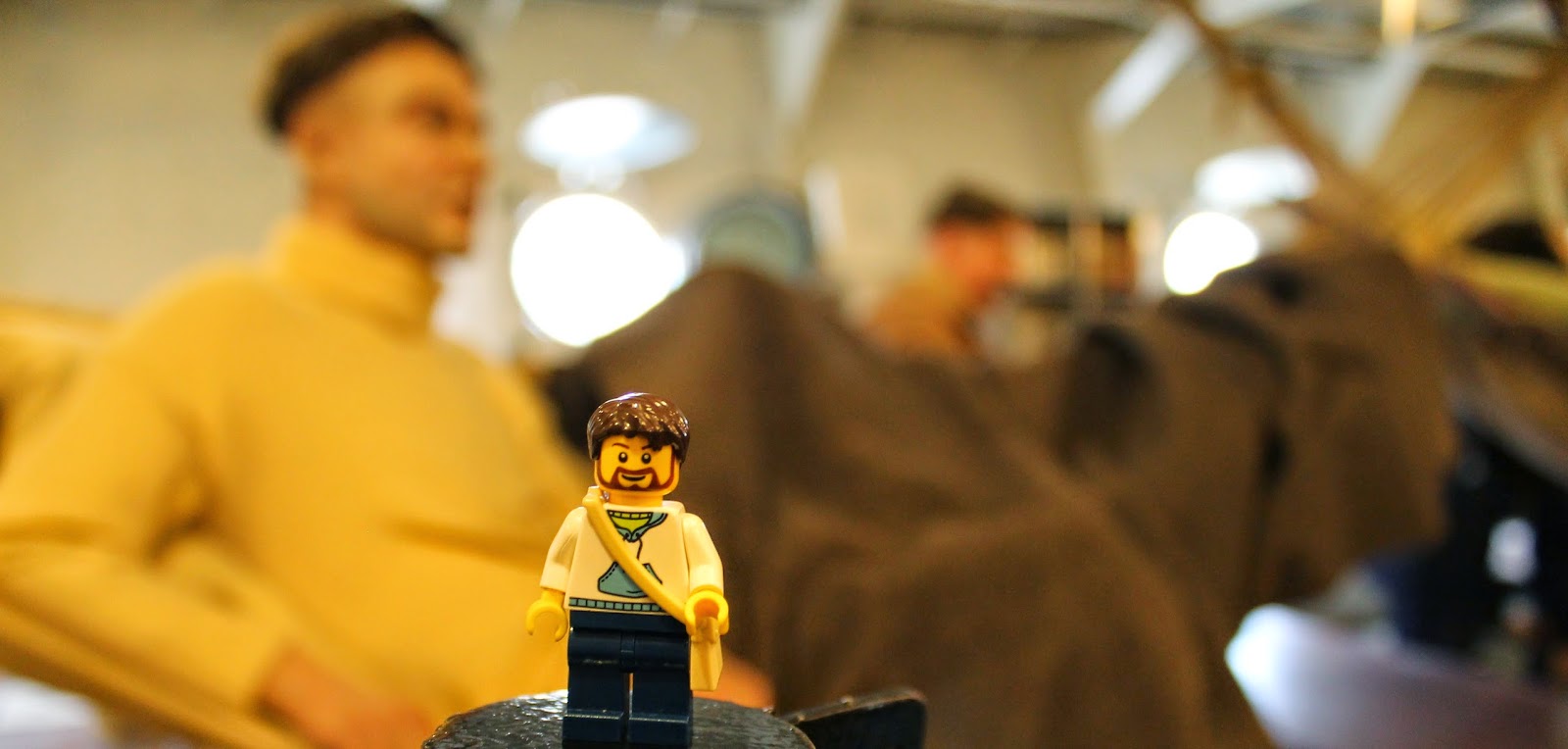
Will has lost interest in evolution of man for some reason.
They look through each species individually. In doing so they look at the tools they use, what their environment they lived in, and what short of wildlife which lived around them.

This is a great place for the blind as there are many replicas and reconstructions that people can touch. 

Although if you have kids it might not be the best idea to take them before it closes on the 28th September 2014 as our ancestors didn't necessarily wear clothes. So with their reconstructions and illustrations are accurate AND mostly are nude. So if you don't feel comfortable for you or your children to see full frontal rubber reconstructed nudity then it is probably not a great idea to take them. If this might put you off this is only near the end, so you could easily skip it and still enjoy the exhibit. 

Homo Neanderthalensis reconstruction 

Natural History Museum

Lego Museums visited the Natural History Museum on the 12th September 2014. This Museum is a architectural marvel with the amazing decorative tiles all over the museum itself. You might be coming to the museum for the natural history but the museum itself is soaked in architectural history, as well the historic and famous dino Skeletal model Dippy the Diplodocus who you are hit with once you enter the building itself.  

Dippy the Diplodocus 109 years old

The whole place is jam packed with animal history from Dinos to the Human story of Evolution and some species that you can recognise even today. Although you will need to book about a week off to even scratch the surface of the amount of stuff with in this huge museum. It is definitely worth the time to come down and see what they have to offer. 


Will has lost interest in the
evolution of Man for some reason.
This is a great place for children as they will be amazed by the huge and mind blowing specimens that are shown throughout the museum. There is a wildlife garden where they could run around and explore and have fun. This is the best place where they can have fun and learn at the same time. This will keep them occupied until exhaustion but it will all be worth the effort.  


This museum is also well placed in a street grouping of all the great museums in London; the V & A Museum, Science Museum and of course Natural History Museum. So if you feel like a change of scenery then you have a museum which is only a stone throw away. So go and have fun and explore until you're mind explodes.    

Wednesday, 9 July 2014

Visit to HMS Belfast with the Imperial War Museum

Lego Museums visited HMS Belfast in London on the Thames in 9th July 2014. This is a warship which was built in 1936 and launched in Belfast on St Patrick's Day 1938. She was the largest and most powerful cruiser in the Royal Navy of the time and still was for most of the War.

Will going for a close up of HMS Belfast.
It was designed for the protection of trade, was called into service to patrol the northern waters to impose a maritime blockade on Germany. Although after being hit by a mine, she was out of action for three years. 

The ship bell - HMS Belfast

After returning to the home fleet in 1942. HMS Belfast was sent to to the arctic to protect the convoys and Russia's supply route throughout the war. HMS Belfast continued to be apart of the arctic convoy until 1944 when she spent five weeks supporting D-Day landings and she was reported to have fired one of the first shots on D-Day itself.


Will loves the HMS Belfast.
After the Second World War HMS Belfast played her role in the Korean War 1950-52. She then spent her final years as a peace-keeping duties until she was retired in 1963. 

In 1967 the Imperial War Museum took her under their wing. She was then opened to the public in 1971 on 21st October. 

The way the IWM has done with the HMS Belfast is well done. All way through the warship there are a number of wax works showing that each room was used for. Including sounds of the ship that have been placed in really brings the place alive for all the visitors. Even some of the wax works move to give the visitor a strange feeling that you aren't really alone.


Will is hanging with the crew of HMS Belfast.
Postmaster I wish to gain multiple views on my post, please.
Will is wondering what is for dinner... potatoes... damn it not again!
As well as this, throughout the ship there are a number of original articles that would been used around this time and period. The whole ship is a adventure inside out. A great place to lose the kids in. A great place to go for the day out if you are interested into World War 2 and military weapons of war.      

Saturday, 14 June 2014

Museum Ducks

Museum Ducks is a fellow museum blog on Twitter. If you are Quakers about museums and rubber ducks then join the photography fun. Then take a look... twitter.com/DucksMuseum
Museum Ducks Logo.
Museum Ducks uses the museum collectible duck to have adventures around museums. Sort of similar to Lego Museums in some respects. Using an object to travel around museums and galleries with taking photos.


These are just a selection of museum ducks that are used on the museum blog:

Caveman an old museum duck from the British Museum.
Egyptian from the British Museum.
Roman from the British Museum.

Viking from the British Museum.

William Shakespeare another old duck from the British Museum but now you can find in some libraries such as the Guildhall Library in London

Henry VIII from the Mary Rose Museum.

Friday, 6 June 2014

D-Day Museum 70 Years of the Normandy landings

Lego Museums visited the D-day Museum on the 6th June 2014 on the 70th anniversary of the Normandy landings in 1944. Let’s remember those who sacrificed everything for the greater good on D-Day. Let’s commemorate those thousands who lost their lives so others may live in freedom.


Will with his D-Day 70 year's badge.

Will entering the D-day Museum.

The museum is pact with WW2 history from Portsmouth and other aspects of the Operation Overlord. Going into the museum you come across first is the large and long Overlord Embroidery, which is the modern-day comparison to the Bayeux Tapestry of 1066. This 272ft long piece of art (33ft longer than its 11th century counter-part), looks back upon the dark days before the operation of 1940 to the victory in Normandy in 1944.

The embroidery itself is worth going into the museum alone to see. Although through-out the museum there is a number of other great and interesting galleries to see.

These galleries display a large number of real artefacts for the war alongside some life-like wax works, which gives the objects a life of their own as well giving the visitor a feel of what it was like in times of war within the late 30s and early 40s. Also using their personal objects of the men who lived it gives a touching look into the lives of all who were involved, with the stories of home with the blitz to the life at the front-line in France. This museum also looks at the aspects of both sides, from the Allies and the Germans.


For those military armament fans; there are a large rang of weapons and vehicles what are dotted around the museum. This small museum is fantastically laid-out to easily show the visitors all what the museum has to offer. 

BANG!!!
Will looking out from a landing boat.

Will is driving a U.S. Jeep.

If you are a large WW2 and/or military buff you should go to the D-day Museum to enjoy what they have to offer.

Friday, 23 May 2014

British Museum

Lego Museums visited the British Museum in 23th May 2014. The famous British Museum is known to have a large collection of world historic artefacts from Egypt to Britain itself. This is the oldest National Museum in the World. Where ever the objects come from, there is a huge diversity of the all periods the country of origin. All these objects that are held here are mixed with the most well-known to the unknown e.g. the Rosetta stone, Elgin Marbles to Prehistoric mask of Star Carr and the Iron Age Waterloo Helmet.

Will going into the British Museum


If you are going to the British Museum, would suggest that you really need a stand of silk thread or bread crumbs to found your way out of the labyrinth of gallery full to the brim of world history. 


As you walk into the museum you are hit with the celebrated Great Court. Visitors across the globe look up to have a set of the huge arched glass roof. While in this centre piece of the museum you may enter the main galleries, including the Room of Enlightenment and the long Egyptian exhibit that holds the legendary Rosetta stone.


Will walking through the Great Court.
Will reading some books in the Room of Enlightenment.

If you plan to go to the museum for one day, see and enjoy everything you might be disappointed. As there is over 70 rooms that are flowing with history waiting to be looked at over a number of days. There is a room for everyone's historic tastes. You can see what most appeal to you or go adventurous and see the things you wouldn't necessarily see or with you would be interested in. As a whole the museums is fantastic for young and elderly historic fanatics. The museum is bursting with history so you days of fun at the museum.


The Egyptian Gallery.     
Regularly the museum hosts many different temporary exhibitions like the Viking: Life and Legends; and Eight Mummies, Eight Lives, Eight Stories. Which were on and starting when we visited. Lego Museums will be visiting most of these exhibitions when new ones come about so keep an eye out for new posts of each matter. These temporary exhibitions are normally exclusive to the British Museum, so come and see the ones you wish while you can.

Vikings: Life and Legend

Lego Museums visited the British Museum and its temporary exhibit Vikings: Life and Legend on 23th May 2014. This exhibit is dedicated to the lives of the Viking and looking past the myth of horned helmet savages. This exhibit shows that they were more than raiders from the east to still from the west. They are portrayed in the galleries show that they were patrons of art and religion. Rather than the blood thirsty heathens we hear of today.


Will is a fan of the Vikings. 

Throughout the galleries there are shown weapons that tell you they are more than just used for war but also used for status, showing loyalty and even used after death as ritual offerings. They were men of fashion with clothespins which also show off their love of art. As well as this they show that they were very religious with pendants to Thor, Odin, etc. With this they believe they also believed in the use of magic. Having teeth and plaster paw prints pendants to gain the power and abilities of the animal they come from. Almost like Shamanic beliefs.


Moving though to case to case you have a flood of information that is given to you by linking the objects that you see in there with the information that is given, rather than taking about the individual artefacts in turn they almost use them all as one.

 Oh Will might change his mind about them.

Going into the main hall of the exhibit you will found the overwhelming Roskilde 6, an 11th century Viking ship. This is the centrepiece of the show and quite right to. Even though there is not much of the real timbers left you still get that intimidation of the size with the modern metal frame that they are placed in, which are there to show the visitor the original size and shape of this monster of a ship.  

Although this is a great exhibit, it has had some bad reviews, such as "the cattle crush of this exhibition" by the Museums Association Journal. Yes this exhibit was crowded but in my opinion it was just because it was so popular. So you can't really blame the exhibit at all really with that one. I did have a lot of people complaining around me to their friends and family the business of the galleries but most of the people I saw around were enjoying the lush of information they had before them and getting real stuck in with all the interesting stuff the galleries had to offer.