Monday, 11 May 2015

Albert Einstein - E=mc2

Einstein
1879-1955
Albert Einstein was born in Ulm in South Germany on 14th March 1879. His family moved to Italy after his father's business went under. Einstein studied at the Institute of Technology in Zurich. He published four scientific papers, one looking at his Theory of Relativity and his equation of  E=mcwhich related mass and energy. 

In 1909, Einstein became professor of Theoretical Physics at Zurich, in 1911 professor of Theoretical Physics at the German University of Prague and then returned to the Institute of Technology in Zurich in 1912. In 1914, Einstein was appointed director of the Kaiser Wilhelm Institute for Physics in Berlin. Became a German citizen a year later. 

In 1916, he published his Theory of General Relativity. He then received a Nobel Prize in Physics in 1921, for his discovery of the law of the photoelectric effect and his work in the field of theoretical physics. During the 1920s, Einstein lectured in Europe, North and South America and Palestine. 

E=mc2
However, being Jewish Einstein increasingly became the focus of hostile Nazi propaganda. In 1933, the Nazis took power in Germany, Einstein then emigrated to America. He accepted a position at the Institute of Advanced Study in Princeton and took US citizenship.

In 1945, Einstein retired from the institute but still worked for the rest of his life on his theories. He continued to be in a peace movement. Although on 18th April 1955 in Princeton, New Jersey, Einstein died.

Wednesday, 22 April 2015

Henry Stanley - "Dr. Livingstone, I presume?"

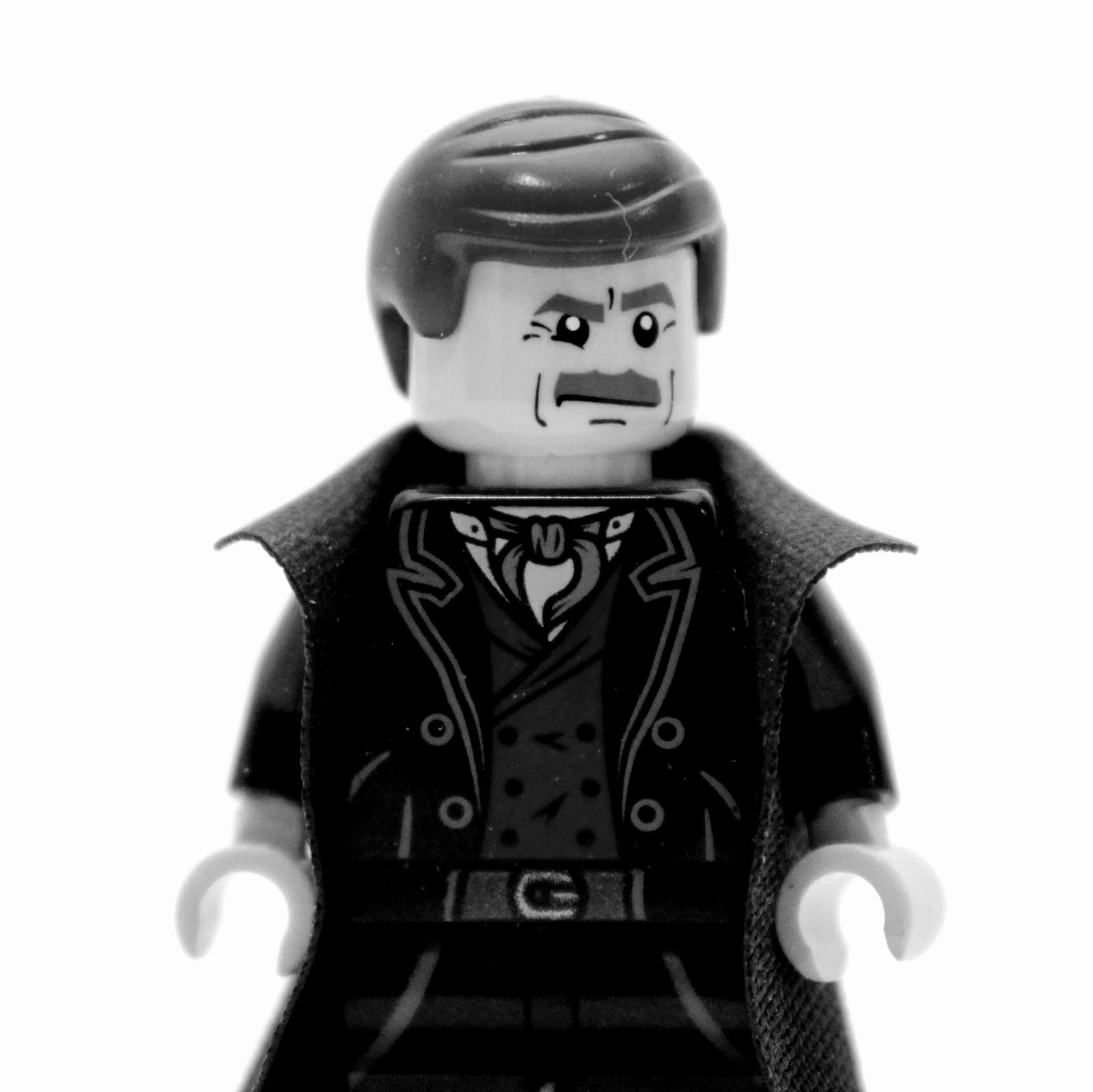
Lego Henry Stanley
John Rowlands was born, illegitimately, on 28th January 1841 in Denbigh, Wales. He was brought up in a working house. Although in 1859, Rowlands moved to New Orleans, where he befriended a merchant, Henry Stanley, whose name he adopted. 

When the American Civil War broke out in 1861, Stanley worked both sides and then worked as a sailor and journalist. In 1867, he became a special correspondent for the New York Herald. 

In 1869, he was commissioned to search for the missing Scottish Explorer David Livingstone, who had been missing since 1866, when he set off in search for the source of the Nile. Stanley went to Livingstone's last known location Zanzibar. In November 1871, he found the sick explorer.

Dr. Livingstone
1813-1873
After Livingstone died in 1873, Stanley continued his exploration of the region funded by the Herald and a British newspaper. He managed to explore most of central Africa, and travel down the Lualaba and Congo Rivers. Later reaching the Atlantic in August 1877.

After he failed to gain support from Britain, for his plans to develop Congo region, he found success in the King of Belgium, Leopold II, who was eager to tap Africa's wealth. In 1879, Stanley returned to Africa, where he worked to open the lower Congo to commerce by the construction of roads. In doing this he used brutal means, such as forced labour. On the other hand, Stanley's efforts created the foundation for the Congo Free State, which was privately owned by Leopold II.


In 1890, Stanley finally returned to England, where he married and began a worldwide lecture tour. Then becoming a member of Parliament for Lambeth in London, serving from 1895-1900. He was eventually knighted in 1899. However, on 10th May 1904 in London he died.

Monday, 6 April 2015

Andy Warhol - "the idea of waiting for something makes it moreexciting."

Lego Warhol and
his Campbell's Soup tin.
Andrew Warhola was born in 1928 in Pittsburgh, Pennsylvania, US. Both of his parents emigrated to the US from Slovak Republic. Warhola or Warhol was an American artist, who was a leading figure in the movement of Pop Art. His work looked at relationships between expression, celebrity culture, advertisement and death in the 1960s.   

Between 1945 and 1949, Warhola studied at Carnegie Institute of Technology. In 1949 he moved to New York where he changed his name to Warhol. Once there he started work as a commercial artist for magazines, designer for advertising and window displays. 

In the early 1960s, Warhol began experimenting with reproductions based on advertisement, newspaper headlines and other mass-produced image, coming up with the Campbell's Soup tin and Coca Cola bottles.

In 1962, he began his portrait series of Marilyn Monroe. Then later going on to Jackie Kennedy and Elvis portraits. That same year Warhol took part in a New Realists exhibitions in a number of New York art galleries, the first reorganization of Pop Art.

Lego Warhol
with his famou dollar print.
In 1963, Warhol began making experimental films, depicting things from everyday life such as the 'Eat' and the 'Sleep' or something more outrageous as the 'Kiss' or even the 'Blow Job'. Most of these films can last as long as 45 minets to an hour or more. In 1968, Warhol was shot and seriously injured by Valerie Solanas, a radical feminist writer.

Warhol was an internationally famous artist who had his work exhibited around the world through the 1970s and 1980s. Although on 22nd February 1987, Warhol died in a New York hospital after having a gallbladder operation. 

Friday, 20 March 2015

Boudicca - "Win the battle or perish, that is what I, a woman, will do!"

"Win the battle or perish,
that is what I,
a woman, will do"
- Boudicca by Tacitus
Boudicca was born in about 25-30 CE in Colchester, South East England. She married King Prasutagus of the Iceni tribe, East Anglia, in 43-45 CE and had two daughters. When the Romans conquered Southern England in 43 CE, they allowed Prasutagus to continue his rule. 

However, after Prasutagus died in 60 CE, the Romans decided to rule the Iceni directly and confiscated the property of the leading tribesmen. They are also believed to have stripped and flogged Boudicca and raped her two daughters. These actions brought resentment to the Roman rule.

In 60 or 61 CE, while the Roman governor Gaius Suetonius Paulinus was leading a campaign in North Wales, the Iceni conspired with their neighbours the Trinovantes, among others, to revolt against the Romans. Boudicca was chosen as their leader.


Boudicca was armed with 100,000 men attacked Camulodunum (Colchester) where the Romans had their main centre of rule. Camulodunum was burnt to the ground and leaving no survivors.

The next rebel's assault was on the largest, on Londinium (London), where 25,000 inhabitants were killed and parts of the city were burnt down.

Reports reached Suetonius, who gathered his forces to stop Boudicca in her tracks. Boudicca and her army marched on Verulamium (St. Albans), which was mostly populated with Britons who had accepted Roman rule. The inhabitants were killed as the city was destroyed around them.


"I am fighting for my freedom"
- Boudicca by Dio Cassius
Boudicca's army contained about 230,000 men and the Roman forces of Suetonius was only 10,000 men. The location of the final battle in 61 CE, is unknown, although it is believed that the site is in the West Midlands along the Roman road (Watling Street).

Boudicca's forces may had the numbers but they lacked the organizational, skill and equipment, which all contributed to her defeat. The Roman's lost 400 men and Boudicca lost 80,000.

It is uncertain on how Boudicca died. Tacitus claims she fled back to her tribe where she and her daughters drunk hemlock rather be captured by the Roman forces. However, Dio Cassius claims that the great queen died of illness.

Thursday, 5 March 2015

Jack the Ripper - "Dear Boss"

In Whitechapel, London between August and November of 1888, there were five brutal murders and the possibility of 13 more between 1887 and 1891 of prostitutes. This person was named "Jack the Ripper" as given supposedly by the murderer himself in the "Dear Boss" letters.

The first murder took place on 31st August 1888, the body of Mary Ann Nichols was first discovered in Buck's Row at 3:40 am by Charles Cross, a Carman, on his way to work. Robert Paul jointed him after Cross called him over. Cross believed she was dead but Paul believed he felt a heartbeat. So they both agreed that they would alert the first Policeman they met on their way to work. They met PC Jonas Mizen at the junction of Hanbury Street and Baker's Row and they tell him of what they discovered.

Meanwhile, PC John Neil finds the body. He signals to PC Thain and they are later joined by PC Mizen. Thain calls for Dr. Ress Ralph Llewellyn. Dr. Llewellyn pronounced Nichols dead at 3:50am. She had a incision on her neck 1inch below the jaw, it was about 4 inches in length. She was later to have a large incision to her lower abdomen.


Murder of Anne Chapman,
1888
On 8th September, a second body was discovered of Anne Chapman. At 6:00 am Chapman's body was discovered by John Davis, a Carmen, in the courtyard of 29 Hanbury Street. After alerting some of the residences of Hanbury to the incident, he went to report it to the Commercial Street Police Station. A witness said they saw Chapman with a dark-haired, "genteel" man. Another witness came out of 27 Hanbury Street to their courtyard to use the outhouse at 5:30am. He heard voiced from 29's courtyard, a woman saying 'NO!', and then heard something fall against the fence. When Chapman was found her throat was cut and her lower abdomen was slashed open. It was later found that her uterus had been removed. 


On September 27th, 1888, the Central News Agency received a letter what they originally to be a hoax. Although, later in October 1st, they received a postcard written in the same hand. A hoax or not it was the first ever reference to the name "Jack the Ripper". These letters were later known as the "Dear Boss" letters as they were all addressed to "The Boss". Throughout the time of the murders, many different people ever connected to these investigations received one of these "Dear Boss" or "From Hell" letters. From these letters the media started to refer the psychopathic murderer as "Jack the Ripper". The name became popular and is still used and in our minds today.

Murder of Elizabeth Stride, 1888
On September 30th, the third body, Elizabeth Stride, was discovered. At 1:00 am, Lewis Deimschutz, a salesman of jewellery, entered Dutfield's Yard driving his cart and horse. At the entrance, his horse shied and refused to proceed. Deimsckutz suspected something was in the way but could not see since the yard was in darkness. He probed forwards with his whip and came across something he believed was a drunk. He entered the International Working Men's Educational Club to get help in rousing the drunk. Upon returning to the yard with two other men, they discovered that the person was a woman, who was dead with her throat cut. It was believed that Diemschutz's arrival frightened the Ripper causing him to flee before starting his operation of mutilations.

On the same night of the third murder was discovered, the fourth was found also. At 1:45 am, PC Edward Watkins discovered the body of Catherine Eddowes in Mitre Square. Moments before the murder three friends crossed the square. They described seeing a fair haired man of shabby appearance with a woman, Eddowes.  She was found with her throat severed and her lower abdomen was ripped open which allowed her left kidney and majority of her uterus to be removed.

On November 9th, the fifth victim, Mary Jane Kelly, was discovered. At 10:45 am, John McCarthy, owner of "McCarthy's Rent", as Miller's Court was known as, sent Thomas Bowyer to collect past due rent money from Mary Kelly. After many unanswered knocks on the locked door, Bowyer pushed aside the curtains, seeing the body. He informed McCarthy who, after seeing the mutilated remains of Kelly for himself, ran to the Commercial Street Police Station. Afterwards he returned to the court. When the Police entered the room they found Mary Jane Kelly's clothing neatly folded on the chair and her boots were left in front of the fireplace. Her throat was cut right down to the spine, and the abdomen almost emptied of her organs, including her heart.


The many Detective Inspectors
searching for clues.
The investigation was conducted by the Metropolitan Police, Whitechapel, division Criminal Investigation Department (CID), headed by Detective Inspector Edward Reid. After the murder of Nichols, Detective Inspectors, Frederick Abberline, Henry Moore and Walter Andrews were sent from Scotland Yard to assist. After the Eddowes murder, which occurred in the City of London, the City Police under Detective Inspector Jams McWilliam were involved. More than 2,000 people were interviewed, upon 300 people were investigated, and 80 were detained. Giving them 31 main suspects. Some of these were silly and ridiculous suspects, for example, Prince Albert Victor, and Victoria's physician, Dr. John Williams. The media saw the Police's investigation was a joke. They even described it as a game of blind man's bluff and going nowhere.

They never found the guilty person and the story has fascinated us ever since. Even now we still have our own theories and ideas on who did it; but will we ever know the answer to the 127 year old question, who did it?